

NNN and 1031 Exchanges: Why Kansas City Investors Are Acting Now
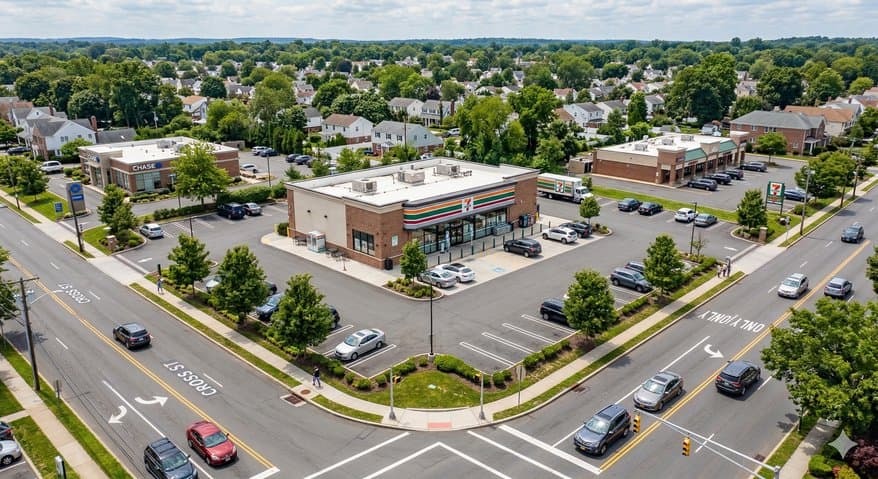
Every few years, the combination of market forces and tax strategy creates a window that serious real estate investors recognize and move through. I believe we're in one of those windows right now — particularly for owners of appreciated real estate who are considering a 1031 exchange into net lease assets. The NAI Global 2025 Market Facts & Trends Report frames the broader investment landscape clearly, and what it shows aligns closely with what I'm seeing in conversations with clients across the Kansas City metro. Here's the setup. Cap rates on net lease transactions have expanded meaningfully from where they were at the 2022 market peak — in many cases 80 to 130 basis points. That expansion translates directly into better cash-on-cash returns for buyers executing exchanges today versus two or three years ago. At the same time, the cost of homeownership has made single-family real estate increasingly inaccessible for a large portion of the population, which creates durable, long-term demand for the retail, service, and convenience-oriented tenants that occupy NNN properties — your dollar stores, quick-service restaurants, pharmacies, auto parts retailers. The 1031 exchange piece of this equation is something I spend a lot of time on with clients, and it's where I see the most immediate decision points. Many property owners in this market are sitting on significant embedded equity — in multifamily, in self-storage, in land — that was built over the past decade. The challenge is that once they decide to sell, the clock starts ticking. You have 45 days to identify replacement property and 180 days to close. In a market where quality NNN inventory moves quickly, being unprepared is expensive. My advice to anyone who has a sale on the horizon or is actively thinking about repositioning their portfolio: do the preparation work now, before you're in the exchange window. Know what your target asset type is. Understand current cap rates and what kind of tenant covenant you're comfortable holding long term. And have a broker relationship in place who is tracking real inventory — not just what's listed on the internet. As the NAI network's only Missouri broker with the Society of Exchange Counselors designation, this is the work I do every day. The Kansas City market is full of investors who have built real wealth in real estate. My job is to help them protect it and grow it intelligently. If a 1031 exchange is something on your radar, let's talk well before you need to.

What the 2025 Market Data Is Really Telling Investors
Every year I look forward to the NAI Global Market Facts & Trends Report because it cuts through the noise and gives me a clear picture of what's actually happening across commercial real estate markets nationwide — not the headlines, but the real data. This year's edition didn't disappoint, and I want to share some of the takeaways that I think matter most for the investors I work with here in the Kansas City metro. The big story right now is bifurcation. Not every asset class is moving in the same direction, and not every market is feeling the same pressures. For investors who are trying to figure out where to deploy capital in 2025 and beyond, that distinction is everything. The markets and product types that have durable demand drivers — necessity-based retail, well-located self-storage, stabilized multifamily — continue to demonstrate resilience. The deals getting done are the ones where the fundamentals are genuinely strong, not just where sellers are hoping cap rate compression will bail them out. What I've seen on the ground in Kansas City reflects what the report points to nationally: buyers are more disciplined than they were two or three years ago, but capital is still out there. The investors who are finding success are the ones who've done their homework — who understand the submarket, who've stress-tested their assumptions on rent growth, and who aren't overreaching on leverage. That's a healthy market, even if it's a slower one. For anyone considering a 1031 exchange, the timing question is back at the center of the conversation. Interest rates have stabilized enough that underwriting has become more predictable, which opens the door for deals that just didn't pencil eighteen months ago. My SEC membership gives me access to national marketing sessions and a network of investors and properties that most local brokers simply don't have visibility into — and in a market like this one, that kind of reach can make the difference between finding the right replacement property and scrambling at the deadline. The bottom line is this: the investors who are sitting on the sidelines waiting for a "perfect" moment are going to look back and wish they'd acted. The data supports a measured but active approach, and I'm working with clients right now who are taking advantage of exactly that. If you'd like to walk through what this report means for your specific situation — whether you're looking to sell, acquire, or exchange — I'd welcome the conversation.

Multifamily's Supply Storm Is Finally Breaking
For the past two years, I've been telling clients that patience would be rewarded in the multifamily investment market — and that thesis is now playing out in the data. The NAI Global 2025 Market Facts & Trend Report confirms what I've been seeing on the ground in Kansas City: the record wave of new apartment deliveries that suppressed rent growth and capped cap rate compression is beginning to recede.